
Tenant Not Paying Rent Ontario: 7 Steps to Take Now

Last Updated:
| 17 Minutes To Read

Quick answer: If your Ontario tenant has stopped paying rent, the legal path is to serve an N4 the day after rent is missed, file an L1 with the Landlord and Tenant Board 14 days later, attend the hearing, and have the eviction enforced by the sheriff. The full process typically runs 4 to 6 months. What separates landlords who recover most of their arrears from those who don’t is timing. The actions taken in the first 30 days after rent is missed largely determine the outcome of a hearing that happens months later. Throughout the process, you cannot change locks, shut off utilities, or remove belongings.
Your tenant didn’t pay this month. You’ve been here before, or you haven’t, but either way, the calendar is now the enemy. Every day between today and the day you have an eviction order is a day of arrears you may never see again. Most landlords get the broad strokes of a non-payment eviction in Ontario. They know the N4 comes first, then the L1, then the hearing. What costs them money is the timing. Waiting 30 days to figure out what to do is 30 more days of unpaid rent you may never recover.
This guide is structured around time, not steps. The first 72 hours is one bucket. The first week is another. Week two to three is its own window. By week three, the path forward is the LTB. Each bucket has a small number of high-leverage actions, and a smaller list of irreversible mistakes that will cost you the case. Sturino Walker Legal Services is a landlord only paralegal firm based in Toronto, representing landlords at the LTB across the GTA and Ontario.

Why the First 30 Days Matter More Than the Next 6 Months
Once an LTB hearing is scheduled, the timeline is mostly out of the landlord’s hands. The board sets the date. The tenant has the right to raise issues. The adjudicator decides what to hear and when. Nothing the landlord does after the L1 is filed materially shortens the wait. What the landlord does before the L1 is filed determines almost everything.
Consider two landlords facing identical situations. Both have monthly tenants who didn’t pay on the 1st.
Landlord A waits a week to see if the tenant pays. They send a couple of texts. They serve the N4 on the 10th. The 14-day termination date falls on the 24th. The tenant doesn’t pay. The L1 gets filed on the 25th. From the original missed payment, 24 days of arrears are baked in before the LTB clock even starts.
Landlord B documents the missed payment on the 2nd. They serve the N4 on the 2nd. The 14-day termination date falls on the 16th. The tenant doesn’t pay. The L1 gets filed on the 17th. They are eight days ahead of Landlord A from day one, and that gap persists throughout the case to the eviction order.
Same tenant. Same arrears starting point. Different recovery. The difference is in the decisions made in the first 30 days.
Step 1: In the First 72 Hours, Document Everything
Before you do anything else, before you call, before you message the tenant, before you tell anyone, pull together your paper trail. The LTB hearing months from now will be decided on documents. The documents you build in the first 72 hours are the documents you will rely on.
Put these in one folder:
• The signed lease, including any addendums.
• A running rent ledger: every month since tenancy began, listing date due, amount due, date paid, amount paid, running balance. If you have been tracking this in your head, sit down now and reconstruct it. Bank statements will help.
• Every text, email, or written message between you and the tenant for the last six months.
• Any maintenance requests the tenant has made, your responses, and the resolution. This matters because tenants raise maintenance issues at non-payment hearings under section 82 of the RTA.
• Your Certificate of Service template ready for when you serve the N4.
• Copies of any previous N-series notices you have served on this tenant, if applicable.
Step 2: In the First 72 Hours, Send One Written Message
One message. Written. Polite. Specific. That’s the only communication you need in the first 72 hours.
Send it by email or text; both create a written record, and email creates a timestamp record more reliably than text. If you only have a phone number, send it by text and then immediately log the text in your records. Do not call. Do not visit. Do not have anyone else contact the tenant.
The message itself should include four things, in this order:
• Acknowledgment that rent has not arrived.
• A specific request for status (‘Could you let me know when you’ll be making the payment?’).
• A short timeframe for response (‘Please reply by…’).
• Nothing else. No threats. No ‘or else.’ No mention of the N4. No reference to eviction. No mention of legal action.
If the tenant replies with a genuine explanation and a date, document it. If they reply with a partial payment offer, accept it (under the RTA you must), document it, and apply it against the arrears. If they don’t reply within your timeframe, document that too. Then move to Step 3 without further communication.

Step 3: Day 2 to Day 7 – Serve the N4 (Don’t Wait)
You can serve an N4 the day after rent was due. Most landlords wait. The waiting costs them money.
Waiting feels reasonable because it feels fair. The tenant might still pay. They might have had a temporary cash-flow issue. A week-long delay before the N4 might look generous on paper. But the LTB does not penalize early N4 service. The form itself does not commit you to eviction; it commits the tenant to either paying within 14 days or facing an application. If they pay within those 14 days, the N4 is void, and the tenancy continues. You lose nothing by serving early.
What you lose by serving late is calendar time. Every day the N4 is delayed pushes the 14-day termination date by the same amount. Every day the termination date is later pushed, the L1 filing is pushed by the same amount. The L1 filing date is what the LTB uses to slot you into its hearing calendar. Hearings are scheduled in the order applications are filed.
In practice, the right window to serve the N4 is between day 2 (the day after rent is missed) and day 7. If you have sent your written message in Step 2 and received no reply or only an evasive one, serve the N4 on day 4 or 5. If the tenant has stopped responding entirely, serve on day 2 or 3. If they have given you a concrete payment date that has passed without payment, serve immediately.
For a full walkthrough of how to fill out the N4, what to include, how to calculate the termination date, and how to legally serve the notice, see our Complete N4 Notice Guide.
Once you’ve served it, the tenant has 14 days to respond; see what happens after N4 served for what to expect during that window.
Step 4: Day 15 Onward – File the L1 Application Immediately
The day after the N4 termination date, if the tenant has not paid in full and has not moved out, you can file the L1. File it that day.
The L1 is filed online through the Tribunals Ontario Portal. The portal accepts filings 24/7. There is no advantage to waiting until the next business day. The LTB processes applications in filing order, and your hearing date is set based on when the L1 was submitted, not when the LTB staff get to it.
Most landlords delay this step by a few days. They are tired. They are hoping the tenant will pay at the last minute. They want to give one more chance. Each of those days, the hearing date moves one more day out.
Before filing, confirm you have:
• A copy of the served N4.
• A completed Certificate of Service documenting how and when the N4 was delivered.
• Your rent ledger updated through the filing date.
• The L1 filing fee – currently paid through the Portal at the time of filing.
For the complete walkthrough of how to file the L1, what to include, common reasons L1s get dismissed, and what to expect from the LTB after filing, see our L1 Application Guide.

Step 5: Week 3 to Week 4 – Offer a Payment Plan in Writing
Once the N4 is served and the L1 application is filed, the second-most important document in the case becomes a written payment plan offer.
Ontario law requires the LTB to consider, at the hearing, whether the landlord made reasonable efforts to work with the tenant to catch up on arrears. This is not optional context; it is a factor the adjudicator weighs. A landlord who shows up with an N4, an L1, and no record of trying to negotiate is in a weaker position than one who shows up with all three, plus a documented payment plan that the tenant ignored.
The payment plan does not have to be generous. It does not have to be accepted. It just has to be offered, in writing, with concrete terms.
Send the plan to the tenant by email, text or letter. Include a response deadline, typically 5 to 7 days. If the tenant accepts, you have a documented agreement and a path back to stable rent. If they decline or don’t respond, you have evidence at the hearing that you tried.
Step 6: Weeks 5+ – Prepare for the Hearing
Once the L1 is filed, you wait. The hearing wait time at the LTB is typically several months, commonly 2 to 3 months from filing to the actual hearing date. During the wait, three things matter.
First, keep your rent ledger current. Every month that passes adds another month of arrears claimable at the hearing. The tenant remains in the unit during this period unless they leave voluntarily. The LTB will want a ledger that goes from the original missed payment all the way to the hearing date, with running totals.
Second, watch for additional tenant issues. Tenants who stop paying often stop maintaining the unit or start causing other problems. Document everything, but unless the new issues rise to a level that justifies a separate notice (an N5 for substantial interference, for example), do not file additional applications.
Third, prepare your evidence package. The LTB requires evidence to be uploaded to the Portal in advance of the hearing, at least 7 business days before, in most cases. Your evidence package will typically include the lease, the rent ledger, and the L1/L9 Update sheet. Organize it before the hearing date, not the night before.
Step 7: After the Order – Sheriff Enforcement
Winning at the LTB does not get the tenant out. An eviction order from the LTB is a legal authorization to remove the tenant, it is not the removal itself. To actually evict a tenant in Ontario, the order must be enforced by the Court Enforcement Office (the sheriff).
Once you receive the written order:
• Read it carefully. Note the termination date, the date by which the tenant is required to vacate.
• If the tenant has not vacated by the termination date, file the order with the Court Enforcement Office. This is typically done at your local courthouse. There is a fee for enforcement.
• The sheriff schedules the enforcement. The wait varies by region. In the GTA, expect 3 to 6 weeks. Smaller jurisdictions are sometimes faster.
• On enforcement day, the sheriff attends the unit and physically removes the tenant. A locksmith is usually arranged in advance to change the locks immediately after.
During the gap between the order and sheriff enforcement, the tenant can still file a motion to set aside the eviction order if they pay the full arrears and the filing fee; this is a procedural right under the RTA. If they do, the eviction is paused while the LTB reviews. Most don’t, but some do, and it can add weeks. Plan for it.
Until the sheriff has enforced the order, the tenant is legally in the unit. The landlord cannot change locks, cannot remove belongings, cannot interfere. The next section covers exactly what is off-limits at every stage of this process.
What You Cannot Do at Any Point in This Process
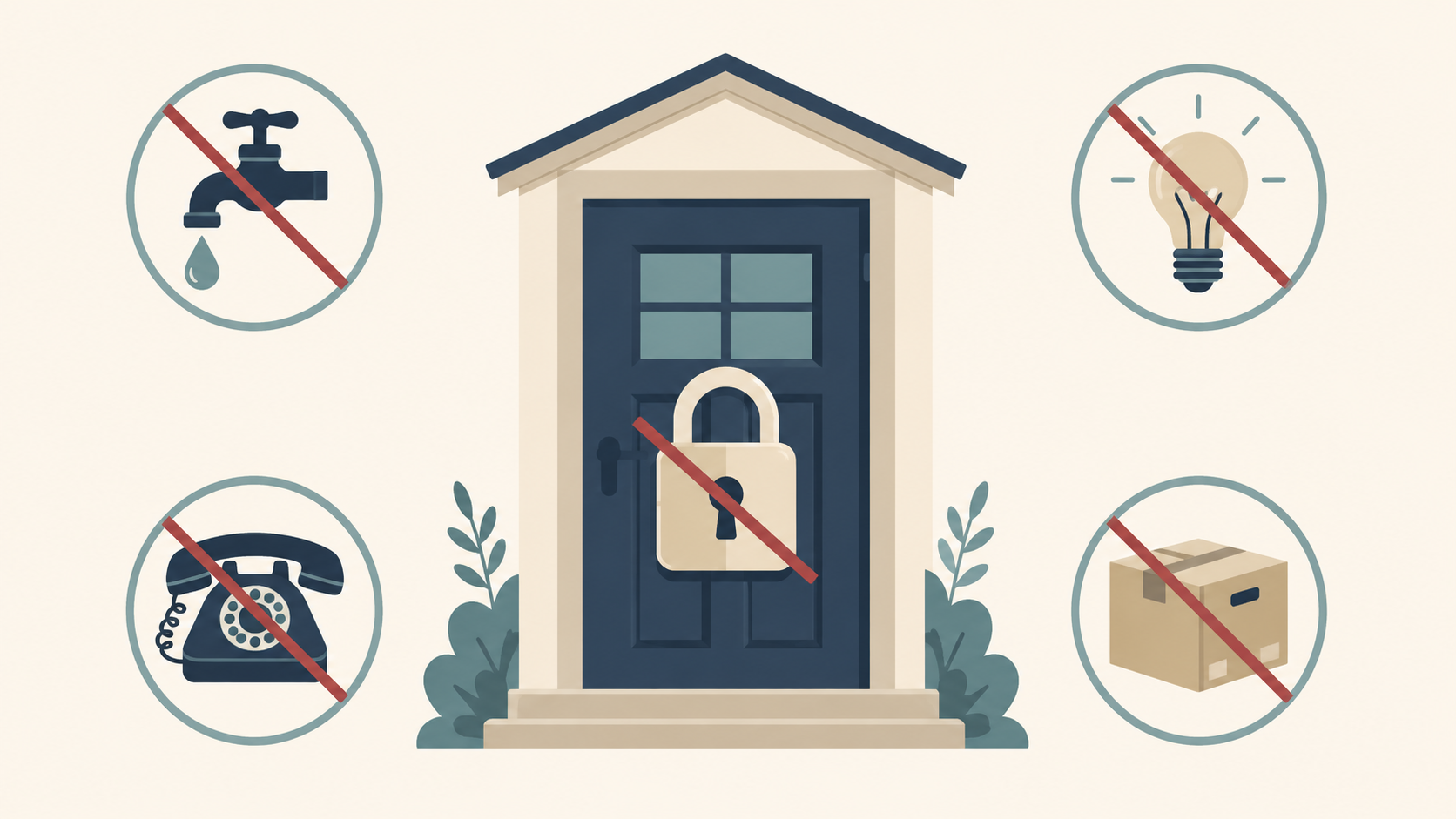
The fastest way to lose an otherwise winnable case is to take action the RTA prohibits. Adjudicators give significant weight to landlord conduct. A single illegal act between the missed payment and the sheriff enforcement can result in dismissal of your application, a T2 application by the tenant, and weeks or months added to your eviction timeline.
Do not lock the tenant out
Do not change the locks under any circumstances. Even if the unit appears abandoned. Even if the tenant has been gone for weeks. Until the sheriff enforces an eviction order, the unit is still legally the tenant’s. Section 24 of the RTA is clear.
Do not interfere with vital services
Do not shut off heat, water, electricity, gas, fuel, or any vital service. Section 21 of the RTA prohibits it. The tenant can file a T2 application and a complaint with the Rental Housing Enforcement Unit. Both will damage your eviction case at the LTB hearing.
Do not remove or threaten the tenant’s belongings
Do not remove the tenant’s belongings, whether from inside the unit or from any storage area. Until enforcement, the tenant has the right to their possessions. Removing them is a separate RTA violation regardless of any unpaid rent.
Do not enter without proper notice
The RTA requires 24 hours’ written notice for most non-emergency entries. Entering without notice gives the tenant a privacy claim and can support a T2 application.
Do not harass the tenant
Do not engage in repeated unwanted contact. Do not contact the tenant’s employer or family about the debt. Do not post notices in common areas of the building. Any conduct intended to pressure the tenant into leaving is harassment under the RTA.
Do not refuse rent payments
Even partial payments. Even after you have served an N4. Under the RTA you must accept payment offered. Refusing is itself a violation.
Do not hire a private bailiff
Only the Court Enforcement Office has the authority to remove a tenant. Hiring a private bailiff or anyone other than the sheriff is unlawful.
When to Hire a Paralegal
The Landlord and Tenant Board allows landlords to represent themselves. The forms are free. The portal accepts self-filed applications. None of that means self-representation is the right choice for a non-payment matter.
A non-payment case is a contested legal proceeding. One party is experienced at delaying it. The other party is trying to recover months of unpaid rent. The cost of getting it wrong is not a learning experience. It is months of additional arrears you will not get back.
What is actually at stake when a landlord goes in alone:
• Procedural defects sink cases. A wrong termination date on the N4. An arrears calculation that misses a payment or includes a non-rent charge. A Certificate of Service filled out incorrectly. Any one of these will get the L1 dismissed at the hearing, and you start over from day one of a process that already takes months.
• Section 82 issues turn the hearing against you. The moment a tenant raises maintenance, harassment, or interference issues, the case stops being about rent. It becomes a documentary contest. Tenants are almost always represented at LTB hearings, either through their own paralegal or through tenant duty counsel. A self-represented landlord across the table from a represented tenant is at a real procedural disadvantage.
• The math is not close. The average loss in a non-paying tenant case in Ontario reaches into five figures by the time the order is enforced. Paralegal representation for the full N4 plus L1 plus hearing is a fraction of that. A dismissed application doubles the loss. Add the 20 to 40 hours of your own time preparing forms, filing applications, and attending the hearing, and the math gets worse.
When To Call Us:
You should engage a paralegal at any of the following points:
• The moment rent is missed, and you suspect the tenant is going to be difficult. Getting the N4 right at day two is cheaper than fixing it at day 20.
• You have an N4 you already served, and you are not 100% certain it is valid. We can review it before you file the L1 and catch defects in time.
• You have filed the L1 and received a hearing date. Even if you prepared everything yourself, representation at the hearing is the single highest-value moment to bring in a paralegal.
• The tenant has raised maintenance, harassment, or Section 82 issues, or has retained their own paralegal.
• You have received an eviction order, and the tenant is not cooperating with the move-out, or has filed a motion to set aside the order.
Earlier engagement is almost always cheaper than later engagement. The most expensive case to fix is a dismissed L1 that we have to restart from a fresh N4.
Sturino Walker Legal Services prepares N4s, files L1s, and represents Ontario landlords at the LTB. We work landlord-side only. You get a written fee estimate at the outset that covers the N4, the L1, the hearing, adjournments, and required motion work, so you know what you are committing to before you engage us. Call 905-738-7171 for a case review.

FAQ: Tenant Not Paying Rent in Ontario
What should I do first if my tenant doesn’t pay rent?
Within the first 72 hours: pull your lease, your payment ledger, and every written communication from the tenant. Send one polite written message asking about the missed payment and requesting confirmation of when it will be paid.
Do not threaten, do not visit the unit, do not change the locks. Document the missed payment in your records with the date. Then prepare to serve an N4 the day after rent was due if no payment arrives.
How long can a tenant not pay rent in Ontario before they can be evicted?
There is no minimum amount of unpaid rent and no waiting period. A landlord can serve an N4 the day after rent is missed, for any amount. After the 14-day termination date passes, the landlord can file an L1 application with the LTB.
However, the LTB hearing typically takes several months to schedule, and only the LTB and the sheriff can actually evict a tenant. The full process commonly runs 4 to 6 months.
Can I evict a tenant for not paying rent in Ontario?
Yes, but only through the Landlord and Tenant Board. A landlord cannot personally evict a tenant in Ontario. The legal path is: serve a valid N4 notice the day after rent is missed, wait the 14-day termination period, file an L1 application with the LTB, attend the hearing, obtain an eviction order, then have the order enforced by the Court Enforcement Office (sheriff). Changing the locks, removing belongings, or shutting off utilities is illegal and can result in fines of up to $50,000.
What if my tenant won’t pay and won’t leave?
The legal process is the same whether the tenant refuses to leave or simply stays in place. Serve the N4 the day after rent is missed. If the tenant does not pay or move out by the termination date, file an L1 with the LTB. If granted, the hearing will result in an order to evict, which is enforced by the sheriff. The tenant cannot be forced out before the order is enforced, regardless of how clearly they refuse to leave.
Should I accept partial rent payments from a non-paying tenant?
Under the Residential Tenancies Act, you must accept any rent payment a tenant offers; refusing it is not permitted. However, a partial payment does not void an N4 notice. Document every payment received with the date, amount, and method. Apply each payment against the oldest arrears first. If the tenant pays the full amount owed before the termination date, the N4 is voided. If they pay only partial amounts, the N4 remains valid, and you can proceed to the L1 application.
What can I not do when a tenant doesn’t pay rent?
Under Ontario law, a landlord cannot change the locks, remove the tenant’s belongings, shut off heat, water, electricity, or other vital services, harass the tenant in person or by phone, post notices in shared areas of the building, or contact the tenant’s employer, family, or other third parties about the debt.
These are violations of the Residential Tenancies Act and can result in fines, T2 applications by the tenant, and dismissal of the landlord’s eviction case.
How long does the eviction process take in Ontario for non-payment?
From the day rent is missed to the day the sheriff enforces an eviction, the full process typically runs 4 to 6 months when the tenant contests the application. This includes serving the N4 (day 1), the 14-day notice period, filing the L1 (day 15 onward), the wait for an LTB hearing (commonly 2 to 3 months), the hearing itself, the wait for the written order, and the sheriff enforcement window (3 to 6 weeks).
Do I have to negotiate a payment plan with my tenant?
You are not legally required to accept a payment plan, but Ontario law encourages landlords to negotiate one before seeking eviction. When the LTB hears your eviction application, the adjudicator must consider whether you tried to work with the tenant to catch up on rent.
A documented payment plan offer (and the tenant’s response or non-response) strengthens your case at the hearing. The plan should be in writing.
Related Articles
- Evict a Tenant for Personal Use Ontario
- 13 Reasons to Evict Your Tenant in Ontario
- Evict A Tenant for Not Paying Rent Ontario
- Landlord Legal Services Ontario
Protect Your Rights Book a Free Consultation Today
Don’t go through the Landlord and Tenant Board process alone. Reach out for a free consultation with our skilled legal professionals who can guide you every step of the way.





